In short: A low-water Mediterranean garden relies on choosing species adapted to the climate (olives, aromatic herbs, grasses, native shrubs), grouping them by water needs, drip irrigation on a timer, mulching the soil and keeping lawn only where it is really used.
The principles
- Study the site: sun, wind, soil type and existing vegetation.
- Zone the irrigation: more water near the house, almost none in the farthest areas.
- Choose the right species: native and Mediterranean plants that cope with summer on their own.
- Drip irrigation with a timer and rain sensor.
- Mulch with bark or gravel so the soil loses less moisture.
- Less lawn: replace it with grass meadows, groundcovers or gravel where nobody walks.
This is the basis of xeriscaping, which we covered in the keys to xeriscaping (in Spanish).
Plants that work
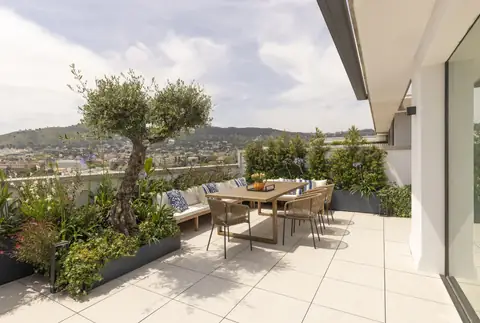
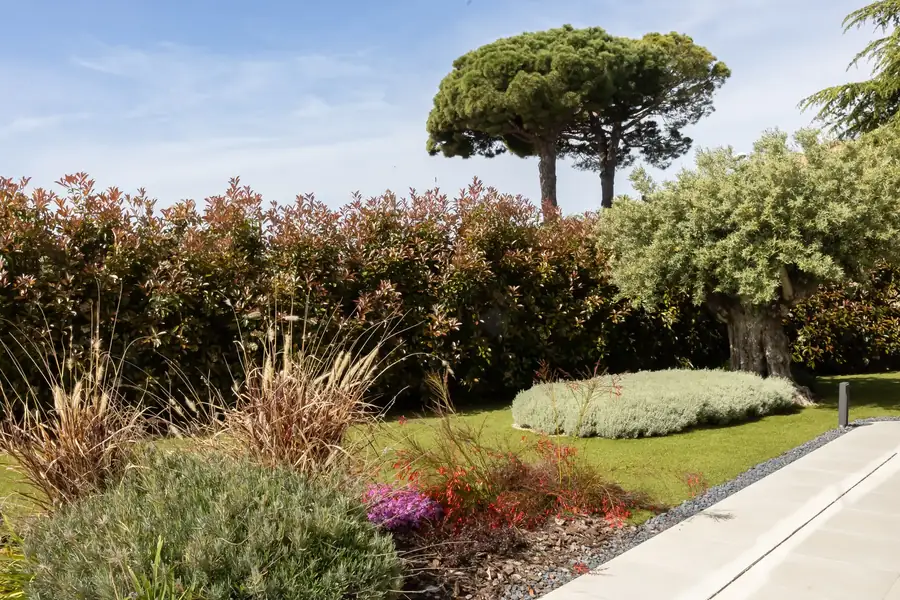
Olive, carob, mastic, myrtle, rosemary, lavender, sages, rockrose, santolina, grasses such as stipa and groundcovers such as creeping thyme.
Examples from our work
In the Mediterranean garden of the Alella house the lawn is limited to the area in use and the rest is Mediterranean flower beds and olive trees. At the El Vendrell house an ancient olive tree and Mediterranean planting frame the pool.
Less water, less upkeep
A well-adapted garden not only uses less water: it also needs less pruning, fewer treatments and fewer hours of work. We design it through our garden design service and care for it with our maintenance service.