In short: A vertical garden works well on a Barcelona rooftop or courtyard when it is designed for its orientation, with a structure that protects the wall, controlled automatic irrigation and species suited to the light it gets. With regular checks it stays green all year round.
Why a vertical garden
In such a dense city, the wall is often the only free space for greenery. A living wall softens party walls and light wells, improves insulation and completely changes how a space feels. As Manuel Maíllo put it in an interview with Interiores, the idea is that when you look, you don't see a wall but a garden.
What to study first
- Orientation and light: they decide the species. A north-facing wall does not take the same plants as a south-facing one.
- Structure: the growing system is kept apart from the wall to protect it from damp.
- Irrigation: automatic and controlled, with run-off collected.
- Access for maintenance.
Plants and composition
We combine species of different textures and colours like a painting: ferns and shade plants on shady walls; aromatic herbs, grasses and succulents on the most exposed ones.
An example on a rooftop
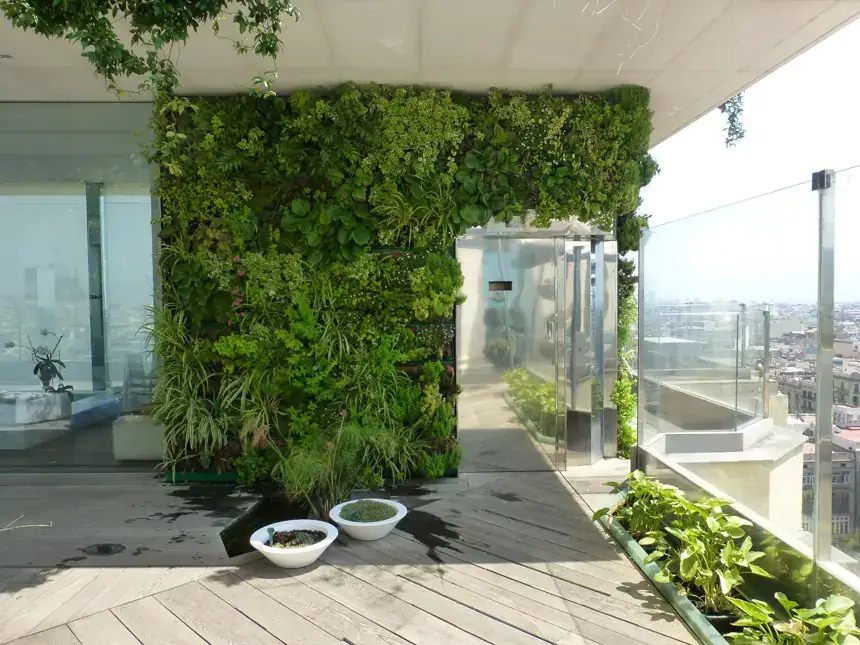
Our vertical garden photos show a Barcelona rooftop where a large living wall surrounds the lift exit and frames the terrace.
Maintenance
Less than you might think if the design is right: irrigation checks, replacing the odd plant and light regular pruning. It is included in our maintenance service. We work in Gràcia, the Eixample and all over Barcelona.